
All Articles
-
The bot that helps no one: Why chatbots and voicebots fail
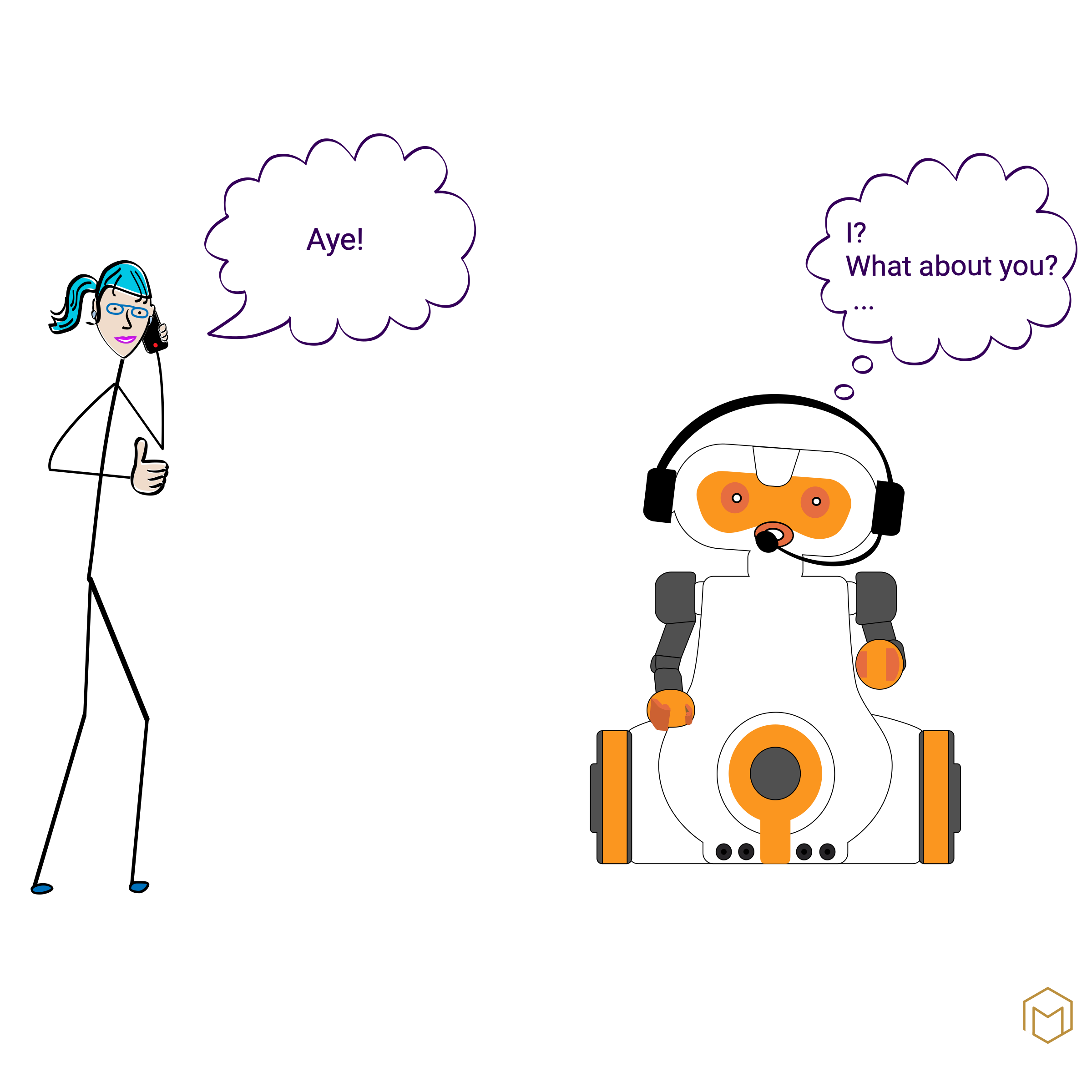
You type your question into the small chat window on a website. Perhaps on your bank’s site, perhaps on a mail-order retailer’s site, perhaps on your insurance company’s site. You phrase the question clearly and politely, because you’ve got used to ChatGPT. Shortly afterwards, the reply arrives. It has nothing to do with your question. You try again, keeping it simpler and using different words. The next reply is a boilerplate text from the FAQs. You give up and dial the customer service number. This experience has been documented in studies. A 2024 UK survey by Cavell Group shows that around half of UK consumers now prefer human interaction as the quickest way to resolve customer service issues, while 35 per cent say that automated systems and chatbots fail to deliver satisfactory service. And 45 per cent have tolerated a product problem rather than deal with customer service.
Since ChatGPT, customers have come to expect a contact person who understands their question, keeps the context in mind and, when in doubt, asks for clarification rather than making assumptions. What they get is a FAQ machine in new packaging. Disappointment is inevitable.
Read more... -
The myth of the ‘man-month’: more people, later completed
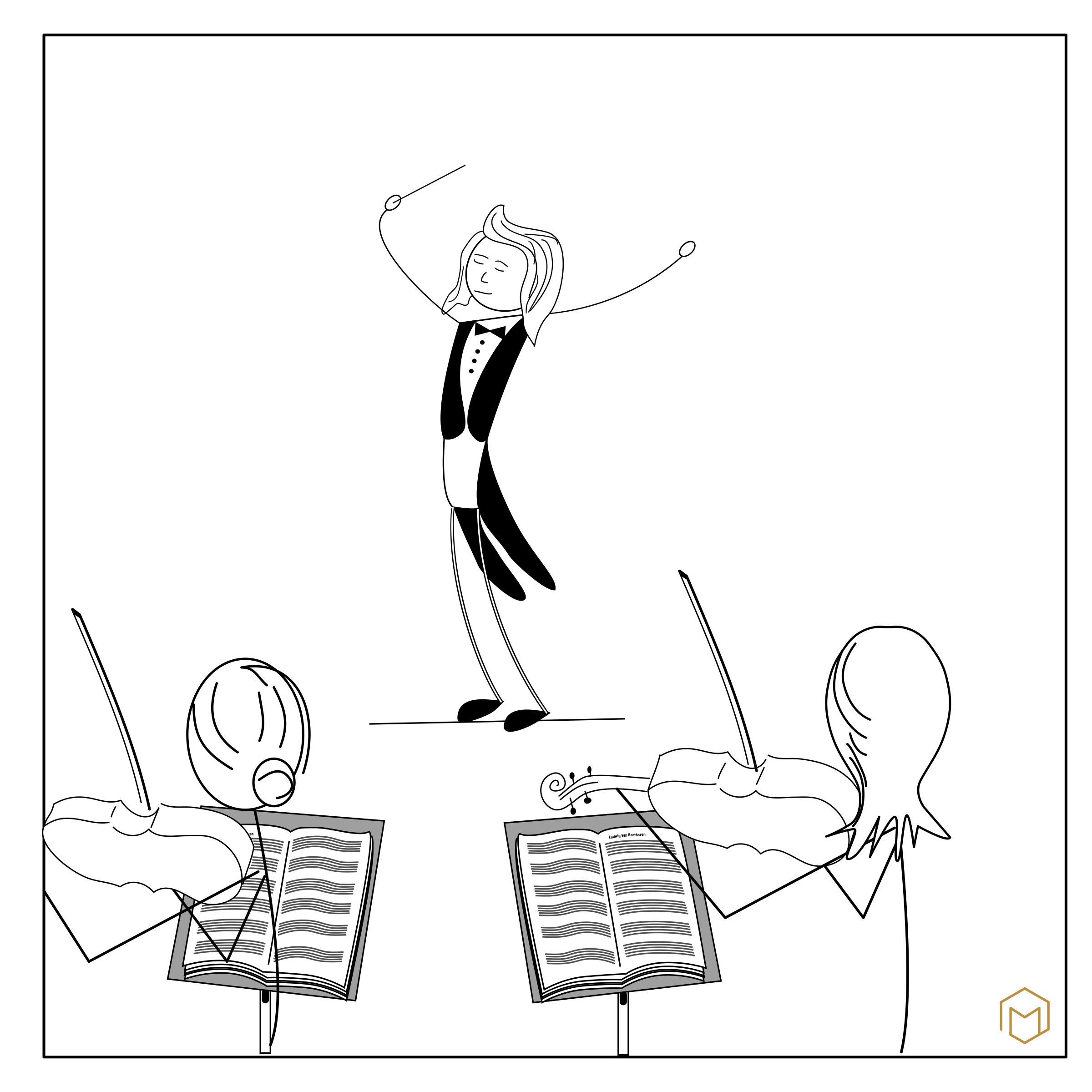
I recently came across a problem that’s often used as a textbook question. An orchestra of 120 musicians takes 40 minutes to perform Beethoven’s Ninth. How long do 60 musicians take to perform the same symphony? Below it, helpfully, it says: Let P be the number of musicians and T the time.
Read more... -
Sustainable AI: The right tool saves resources
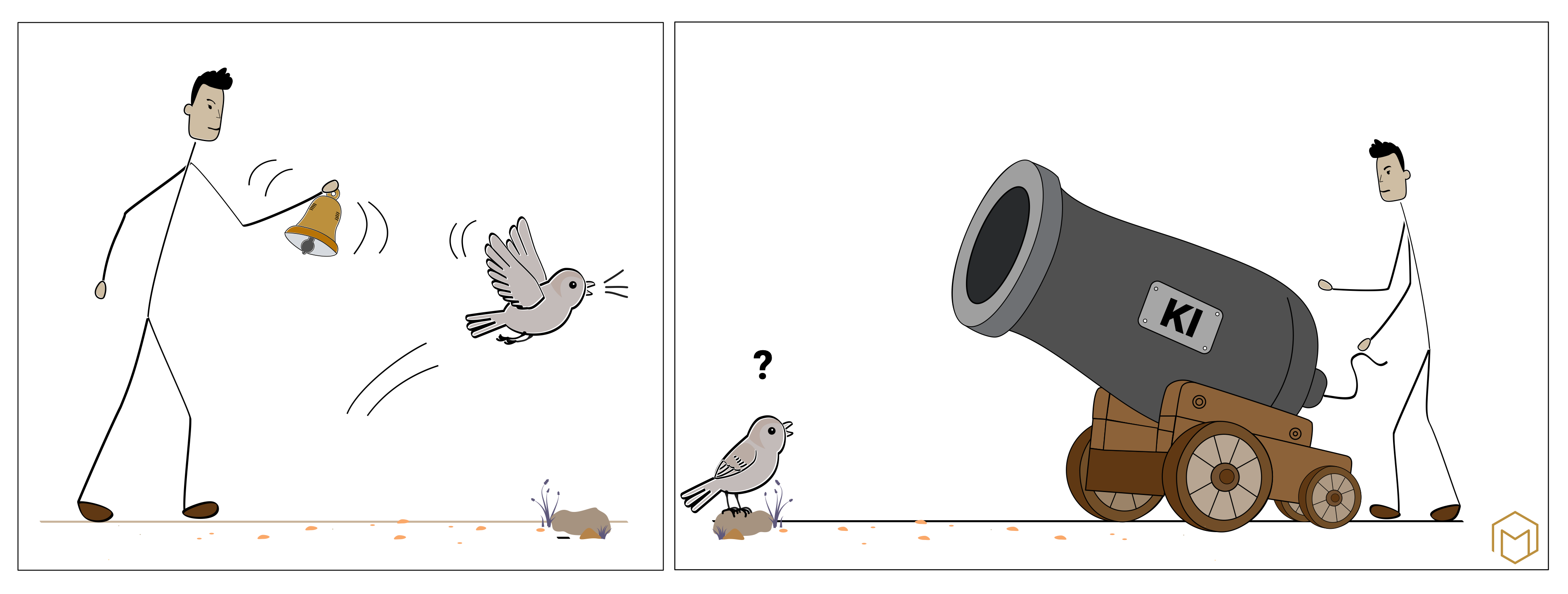
It is now well established that AI does not run for free. Dr Dina Barbian shows that AI requires energy and water throughout its entire life cycle: from the manufacture of chips and servers, through the training of models, to every single small task.
Read more... -
AI Without the Hype: explainability. What decision-makers need to know when using AI
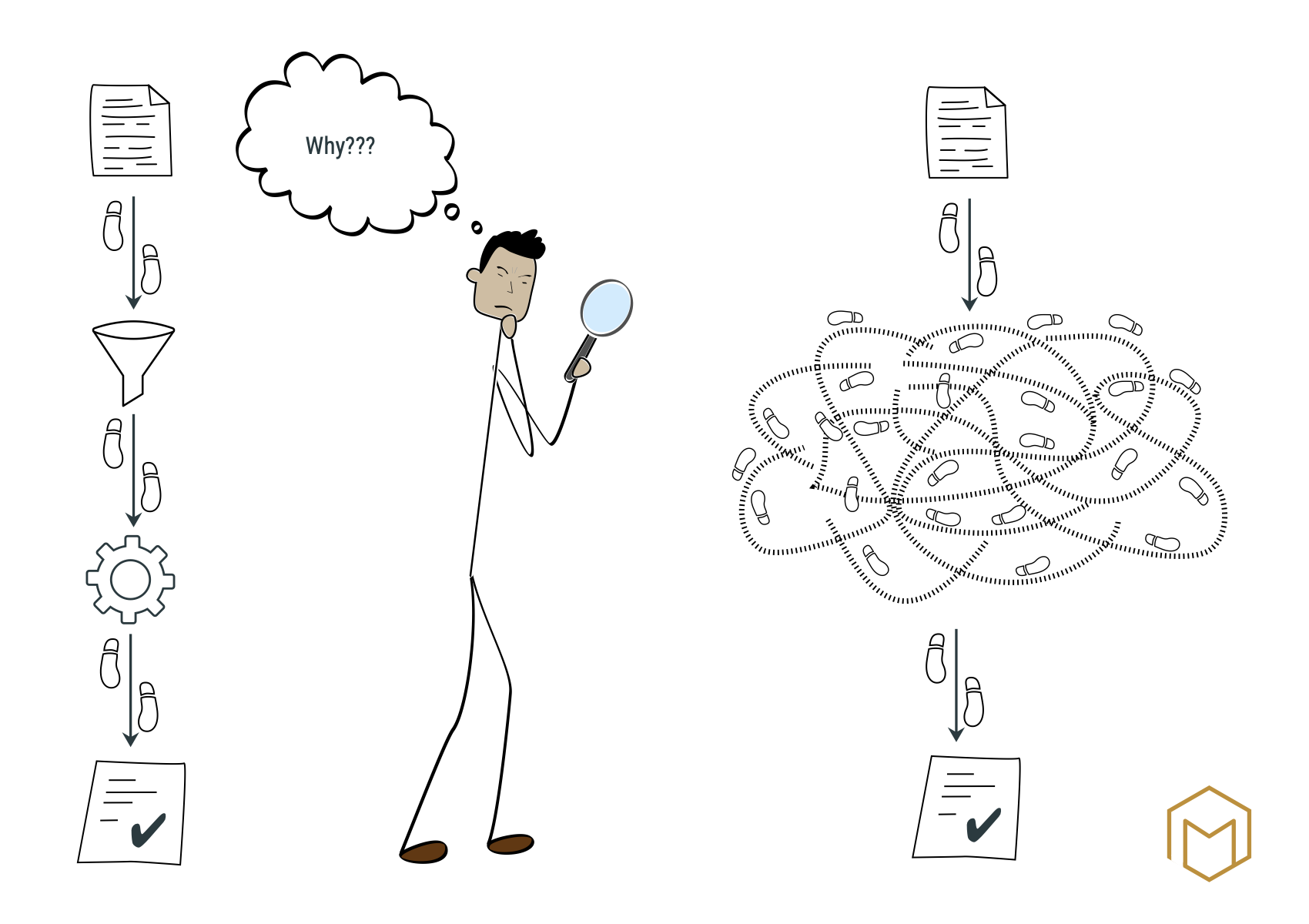
A customer learns that their tariff is being switched to PrePaid. An AI is behind the decision. They ask: Why?
This question has two aspects. The business aspect: Do I myself understand what the system has done? The legal aspect: Do I need to be able to explain the process if the customer objects or a court asks?
The second question is not the subject of this article. It is a matter for the legal department. What matters here is this: if the answer is ‘yes, I must’, this has consequences for the AI involved in the process. This is precisely where the choice of technology becomes crucial.
Read more... -
First the process, then the tool
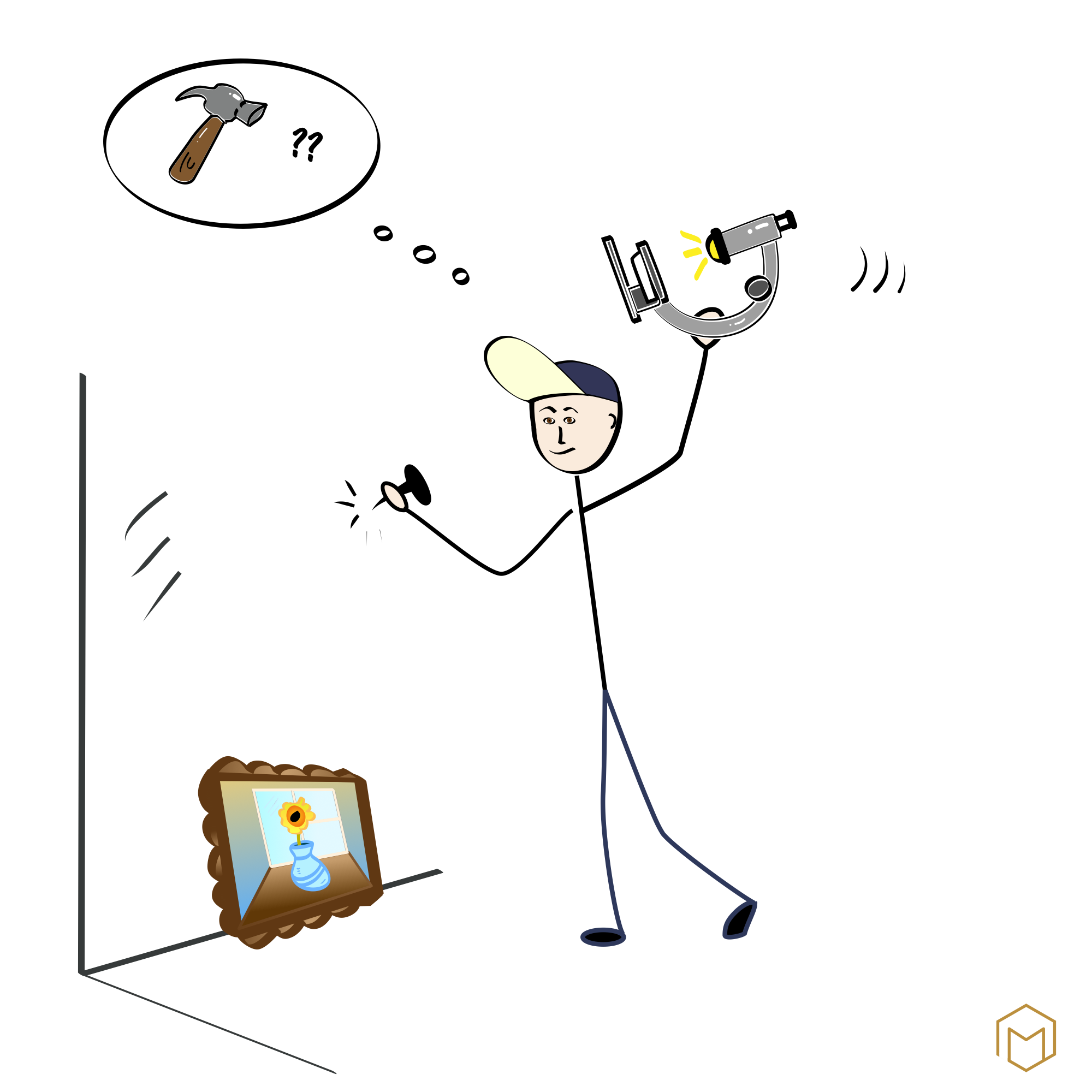
Almost every executive presentation I’ve seen recently contains the same sentence: ‘We need to do something with AI.’ What’s rarely mentioned alongside it is the problem it’s supposed to solve. The order is backwards. First comes the desire for AI, then the search for a task that fits it. Many even openly admit what triggered this: at the last conference, everyone was saying they were already using AI.
Read more... -
AI Without the Hype: Death by GPS and automation bias – why we blindly trust AI
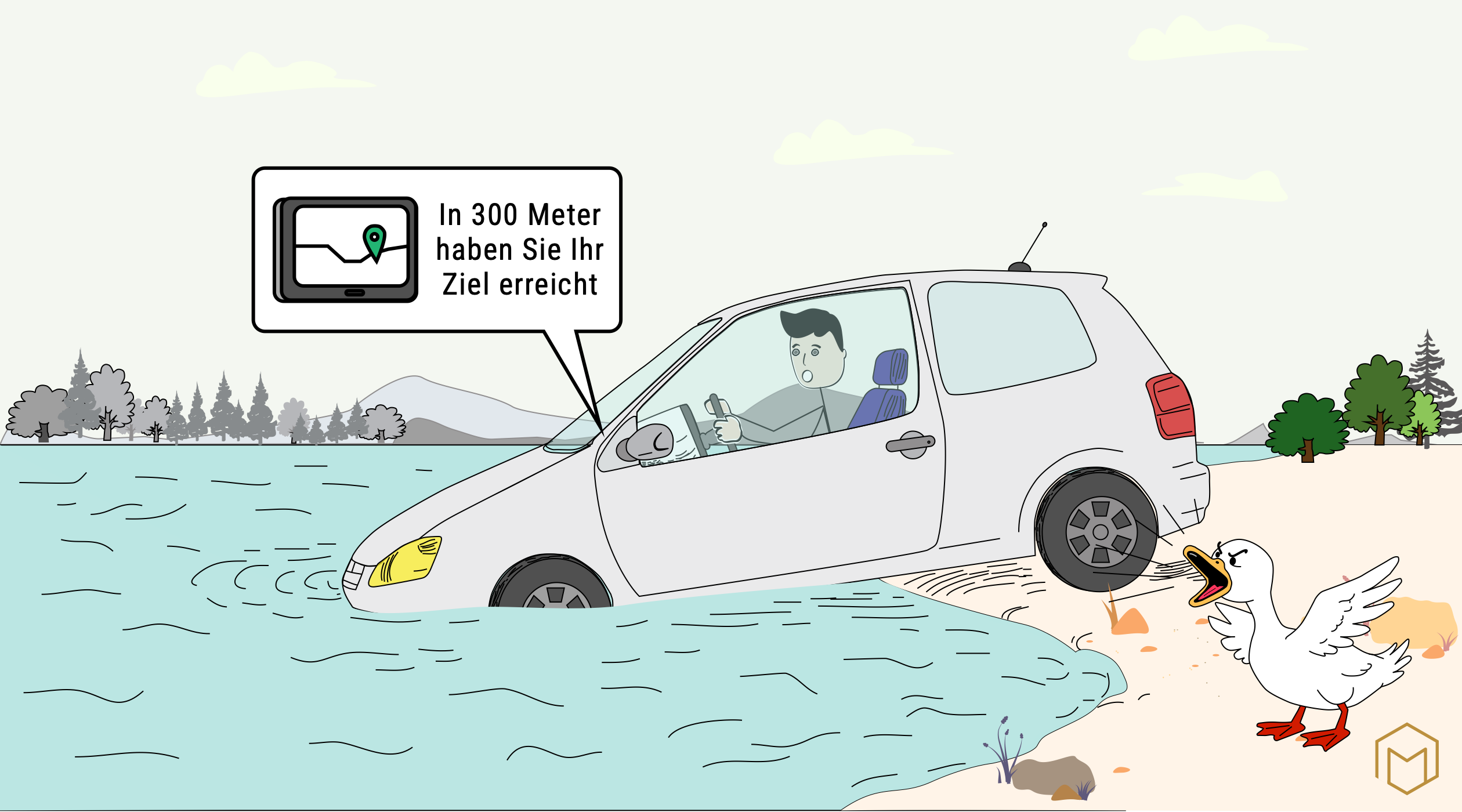
Imagine you’re driving through an unfamiliar area. The sat-nav tells you to turn left, the road looks strange, and a sign warns of a flooded ford. You turn left anyway. Sounds absurd? It happens all the time. In English, a specific term has even become established for this: ‘Death by GPS’. A systematic study identified 158 documented cases between 2010 and 2016 alone in which people blindly followed their sat-nav into danger. Fifty-two of these ended fatally.
Read more... -
AI Without the Hype: A dice or a clockwork mechanism: why AI never says the same thing twice
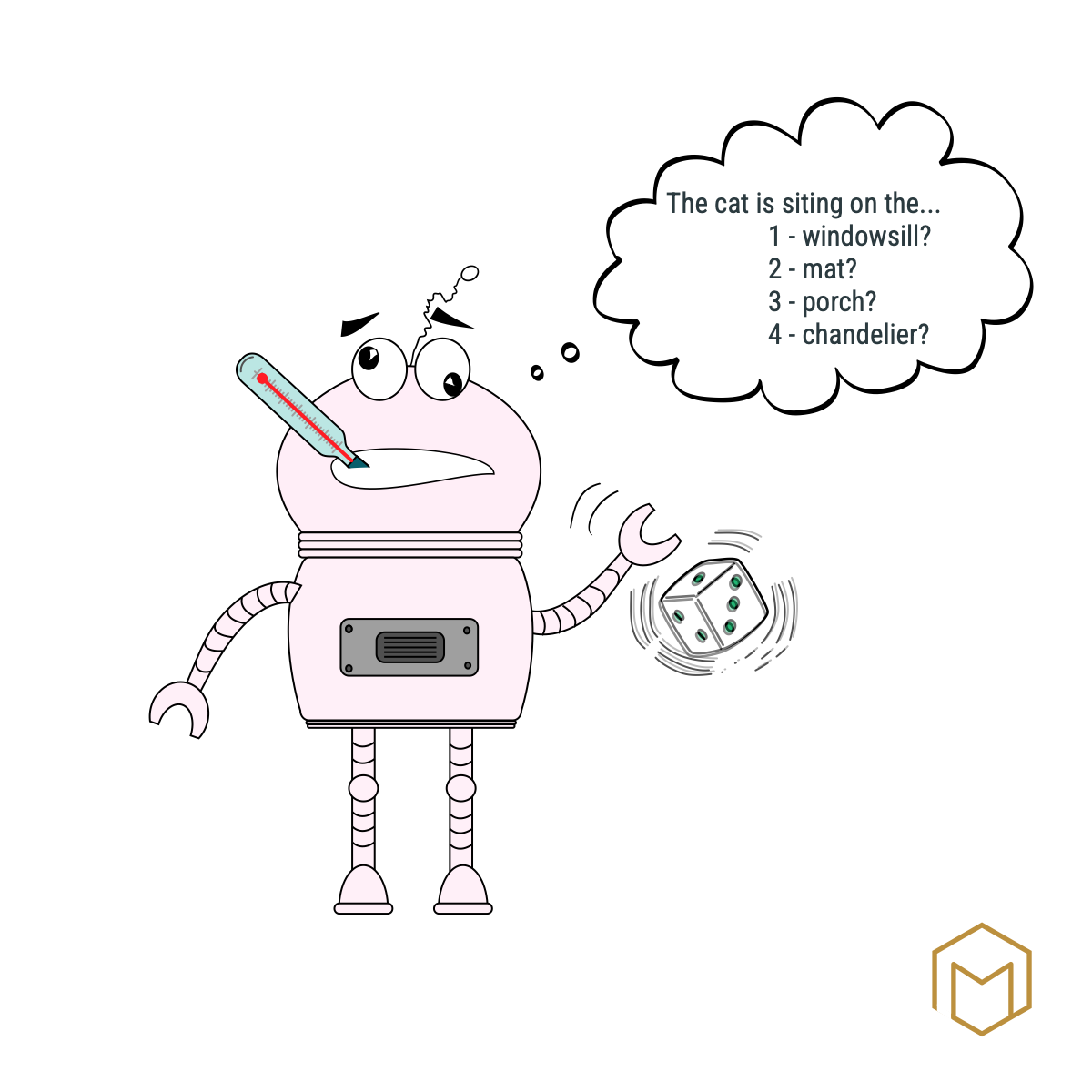
A language model works with words. For each individual word, it calculates which following word is statistically the most likely. Imagine the beginning of a sentence: “The cat was sitting on the…” The model calculates that “the windowsill” is the most common next word in 60% of cases, “the mat” in 20%, “the stairs” in 5%, and “the veranda” in 1%. “The dishwasher”, on the other hand, almost never occurs.
The model makes its selection from this probability distribution. If it always chose the most probable word, the same answer would come out every time, provided the training data has not changed. It does not. The model “rolls the dice” and sometimes opts for “the mat”, sometimes for “the chandelier”.
Read more... -
AI Without the Hype: People make mistakes too; that is why this sentence is misleading
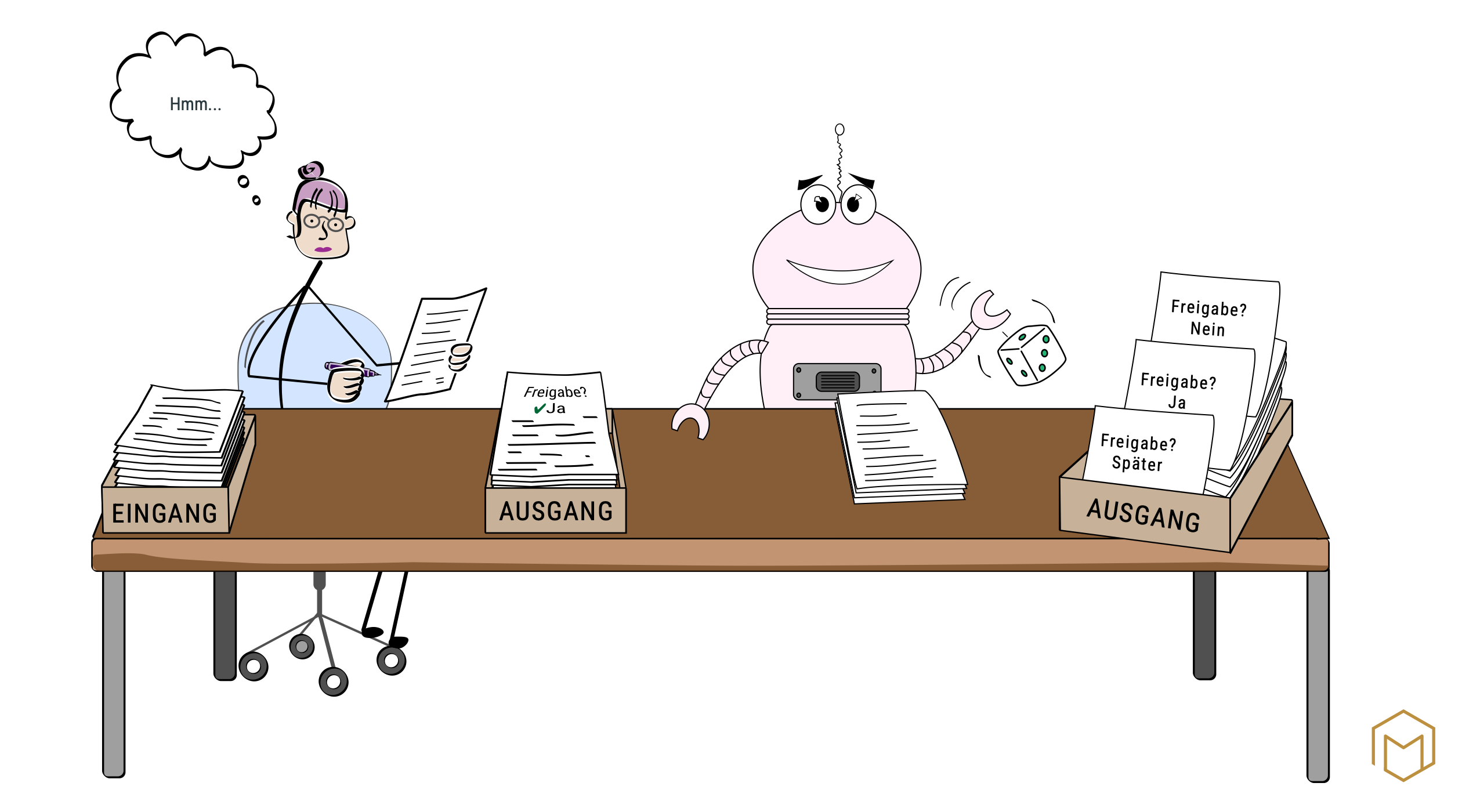
A few days ago, I carried out a little experiment. I asked a language model how many Rs there are in the word ‘strawberries’. It’s a question nobody would ask in everyday life; you can see the right answer at a glance. The machine replied very quickly and confidently: ‘Two’. I asked again. Two again. It wasn’t until the third attempt that it gave the correct number, with complete conviction.
Read more... -
AI Without the Hype: Why AI seems like magic, and how understanding it demystifies it
The science fiction writer Arthur C. Clarke once said: "Any sufficiently advanced technology is indistinguishable from magic." Typically, Clarke’s law is used to describe an encounter with unimaginable technology. To someone from the Middle Ages, my robot vacuum cleaner would seem eerie. We, on the other hand, know exactly what it can and cannot do.
Read more... -

AI Without the Hype: The ELIZA effect and why we anthropomorphise AI
During my university studies, I programmed a simple dialogue agent. The principle was straightforward: recognise the input, match it against a pattern, and return the appropriate response. No intelligence. No empathy. No understanding. A programme that merely pretends.
Read more... -
Spotting unnecessary processes: Why municipal utilities guard garden benches
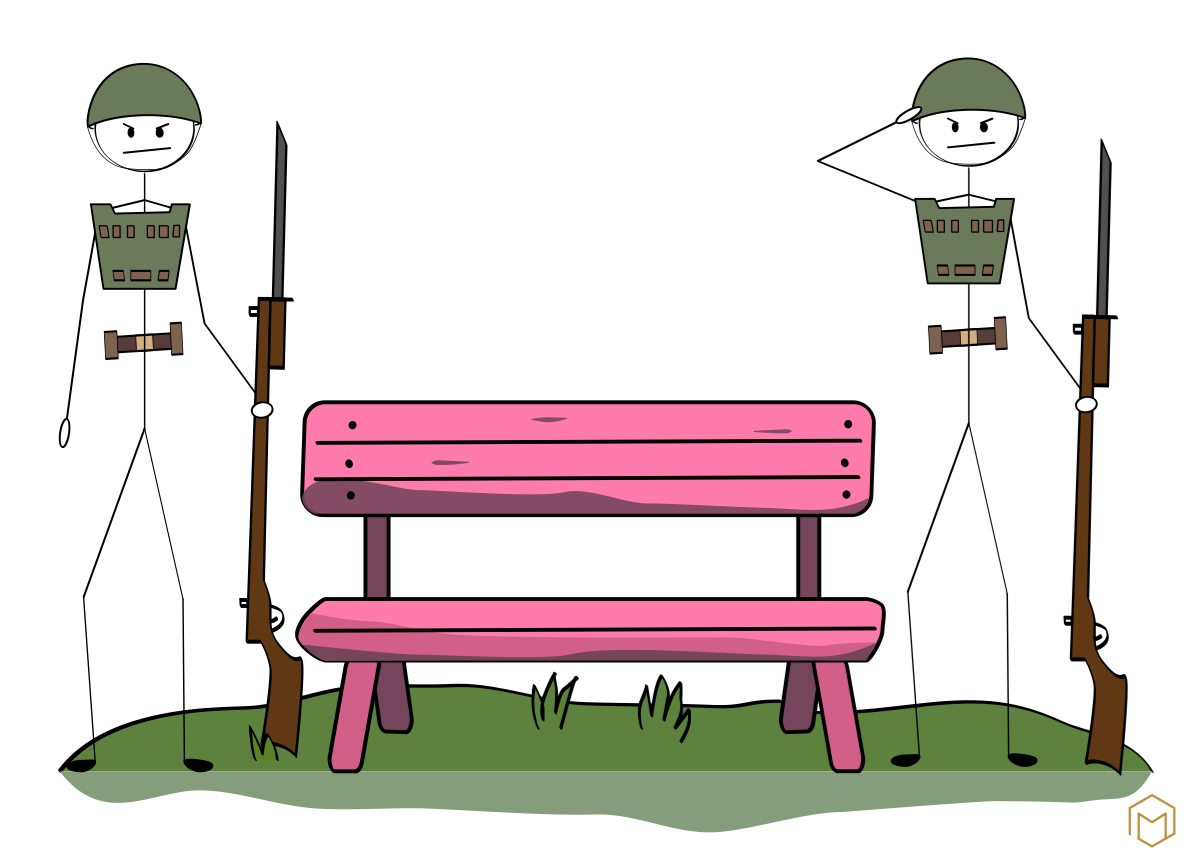
I heard a joke the other day. A new major takes command of a unit and finds two soldiers standing guard next to a garden bench. No one knows why. He asks his predecessor – who says it was already like that when he arrived. Eventually, the major tracks down the two men’s retired predecessor. He simply asks: “What? Has the paint still not dried?”
Read more... -
AI Without the Hype: AI in municipal utilities. What works today and what doesn’t
Hardly any other topic is currently dominating industry discussions quite as much as artificial intelligence. At every conference, in every strategy paper, in every conversation with software providers: AI is the answer. Exactly which question it answers, however, often remains unclear.
Read more... -
AI Without the Hype: How does AI learn? Explained simply for decision-makers
No child learns to ride a bike by being taught the physics behind it. They get on, fall off, and try again. After a few hours, and a few scrapes, they get the hang of it. The child knows intuitively how to keep their balance, without ever having seen a single formula. AI learns in a similar way. Not through rules that someone programmes into it, but through examples. Lots of examples. And through mistakes.
Read more... -

Making better decisions: when gut instinct is enough and when data helps
Does that sound like a contradiction to you? Not to me. If you read on, you’ll find out why. Following your gut instinct is a good thing, isn’t it? Or is it? It depends. In both my personal and professional life, I like to use a simple rule of thumb: the more costly the decision or its consequences, the more rational it needs to be.
Read more... -

AI Without the Hype: Why AI predictions are unreliable and that’s okay
Last summer, I invited some friends over for coffee on the terrace. The app said it would be sunny. We ended up having coffee indoors.
Read more...