
All Articles

Nothing to lose
Today in Tokyo. I have two days free when I could go to Kawaguchiko to see the majestic Mount Fuji: the 3rd and the 9th of September. September isn’t the ideal time for this, so I ask the AI which of the two dates is more likely to be better. The AI checks. On the morning of 3 September, the view isn’t expected to be postcard-perfect, but it should be cloudless; on the 9th, it’s less likely. The AI goes on to explain: buy tickets online, then collect the physical ticket from a vending machine at Shinjuku station. Set off from Shibuya thirty minutes before the train departs.
I’ve been to Tokyo before. Shibuya Station has nine lines across fourteen platforms, spread over several underground and above-ground levels. Shinjuku Station is the busiest station in the world: over 3.5 million passengers a day, more than two hundred exits, twelve railway lines, five railway companies. There’s even a dedicated app for navigation.
I double the AI’s recommendation and set off an hour earlier. I arrive at the train ten minutes before departure. By early afternoon, the clouds have already shrouded Mount Fuji. Had I trusted the AI blindly, I’d be flying home without a photo.
Read more...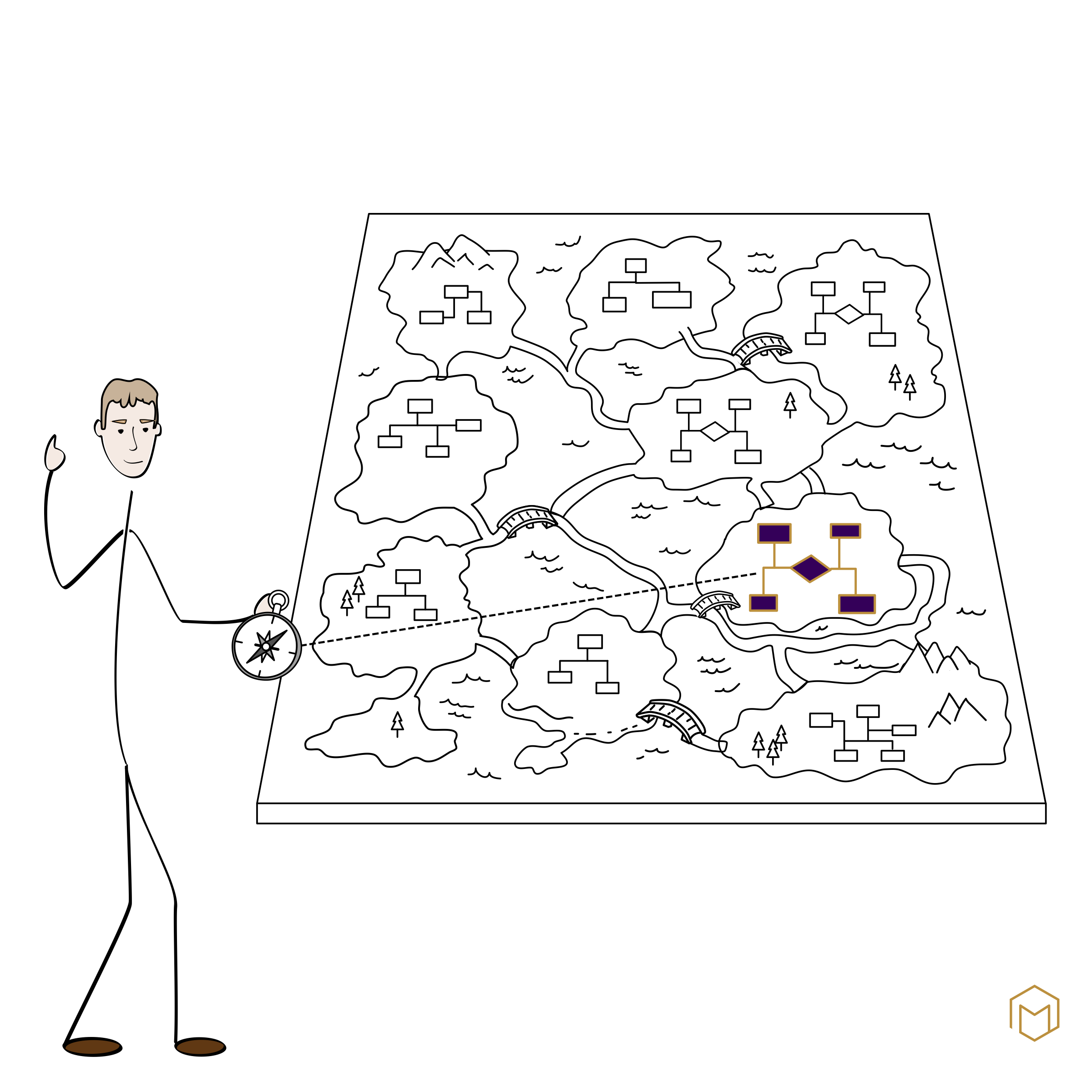
Which process comes first? The preliminary question
Lean, 5S and Kaizen tell you how to optimise a process. They do not tell you which one you should tackle first.
The person responsible for processes and organisation has three projects on her list, all of which are marked as 'strategically important', and she knows she cannot tackle them all at once. The head of customer service has forty manual processes and four fewer full-time equivalents than she did two years ago. She knows that automation is needed here, and she knows she cannot implement everything all at once. The sales manager is working on a campaign for heat pumps. Enquiries are coming in, quotations are taking too long to prepare, and margins are falling. He knows that the processes here aren’t keeping up. The IT manager has all the lists on his desk, each marked ‘very urgent’. He simply doesn’t have the resources to tackle all the projects at once. He starts with the task that’s being shouted about the loudest.
All four assess the importance according to their own criteria. All four are right from their own perspective. Together, this results in four conflicting pictures. And none of them shows where the company as a whole should start. The management observes the discussion and delegates the task of resolving it.
If the budget is large enough, an external consultancy is brought in; they charge five hundred thousand euros, deliver a hundred slides and leave. The four operational managers are left with the very question they started with.
Welcome to the prioritisation conundrum.
Read more...-
The 2.5 factor: Why projects run late
Two decades of leadership experience, scientific evidence and a tool for managers
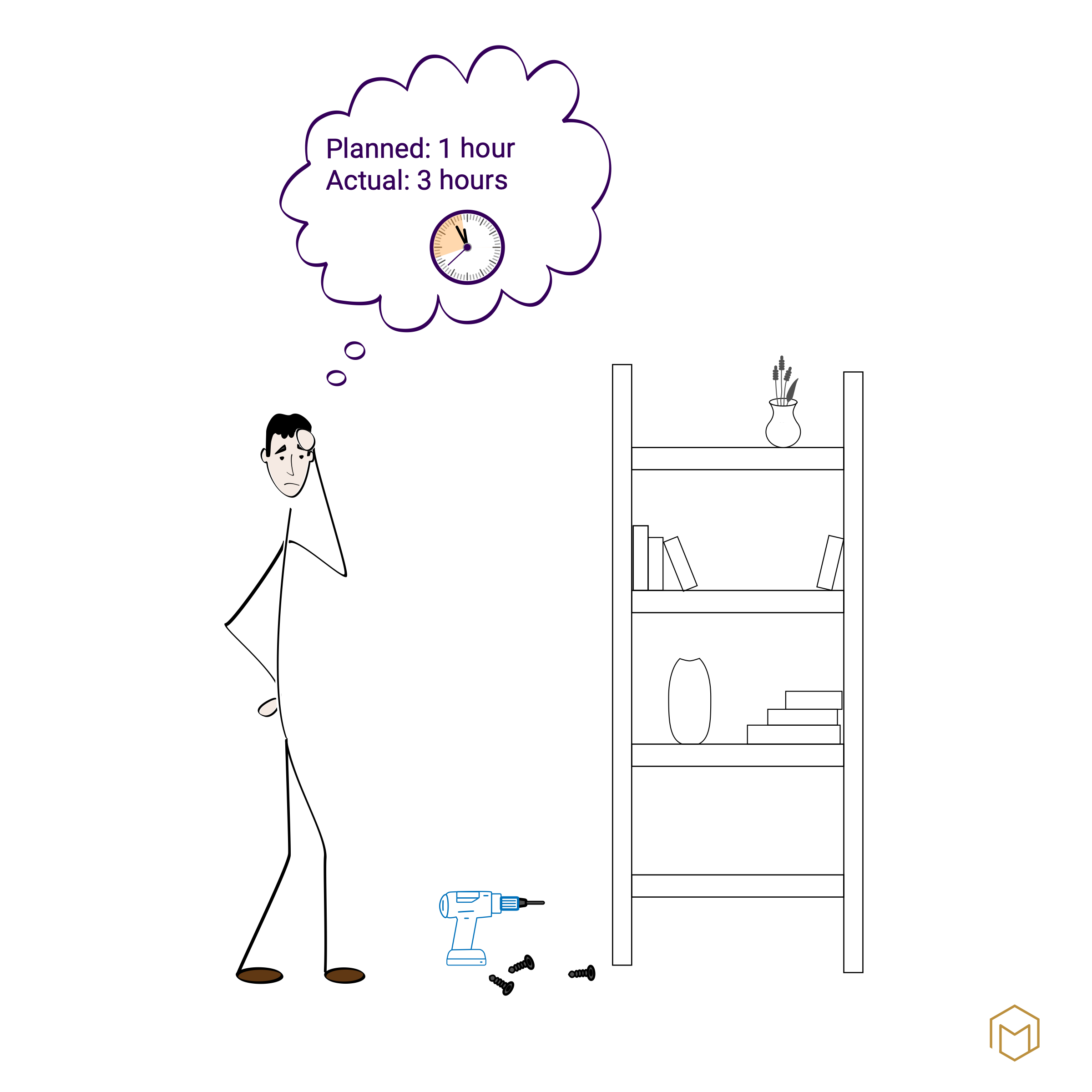
A developer told me he needed two days to complete a task. I planned for five. He was puzzled. After five days, the task was finished. He was surprised. I wasn’t.
I have been leading development and project teams for two decades and have developed my own empirical adjustment factor: 2.5. I apply it to most estimates. Anything estimated to take five days actually takes at least twelve.
This phenomenon has a name in academic circles.
Read more... -
Counterintuitive, even if you do understand it
Why we misinterpret statistics, and how the format changes everything
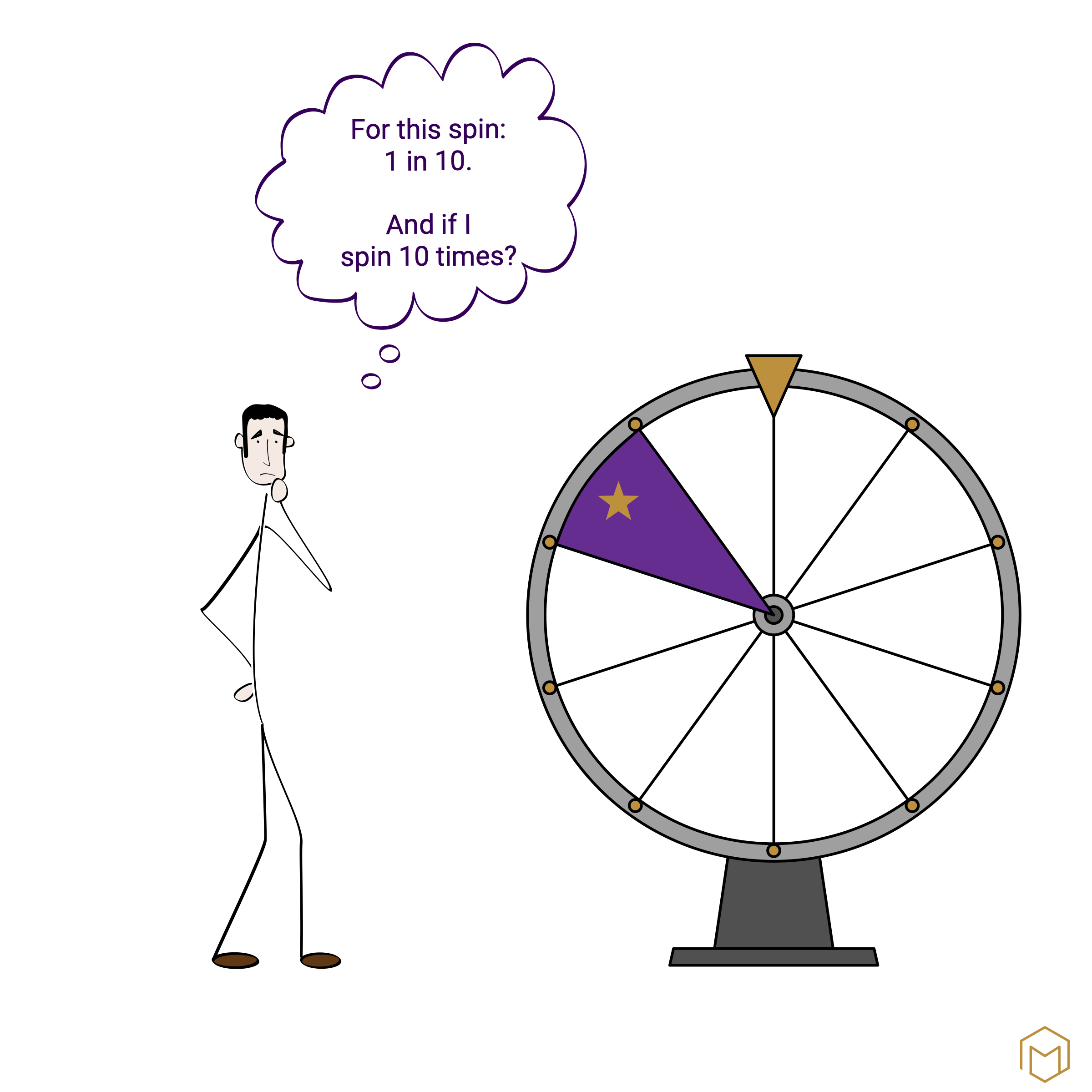
A high school student is playing a computer game and has to spin a wheel of fortune with 10 segments. The odds of winning are 1 in 10 per spin. His question: If he’s lost nine times, surely he’s bound to win eventually? No, I explain to him. The wheel has no memory. Each spin is independent. The odds for the next spin remain 1 in 10.
He nods. Then he utters the crucial sentence: ‘I understand that, but it’s counterintuitive.’
It is precisely this sentence that is the crux of the matter. Statistics are misunderstood because the human brain processes chance and probability in a way that contradicts the actual mathematical behaviour. This way of processing cannot be switched off simply by hearing the correct answer once. It remains counterintuitive.
Read more... -
Planned Failure: The Way Out of the Sunk Cost Trap
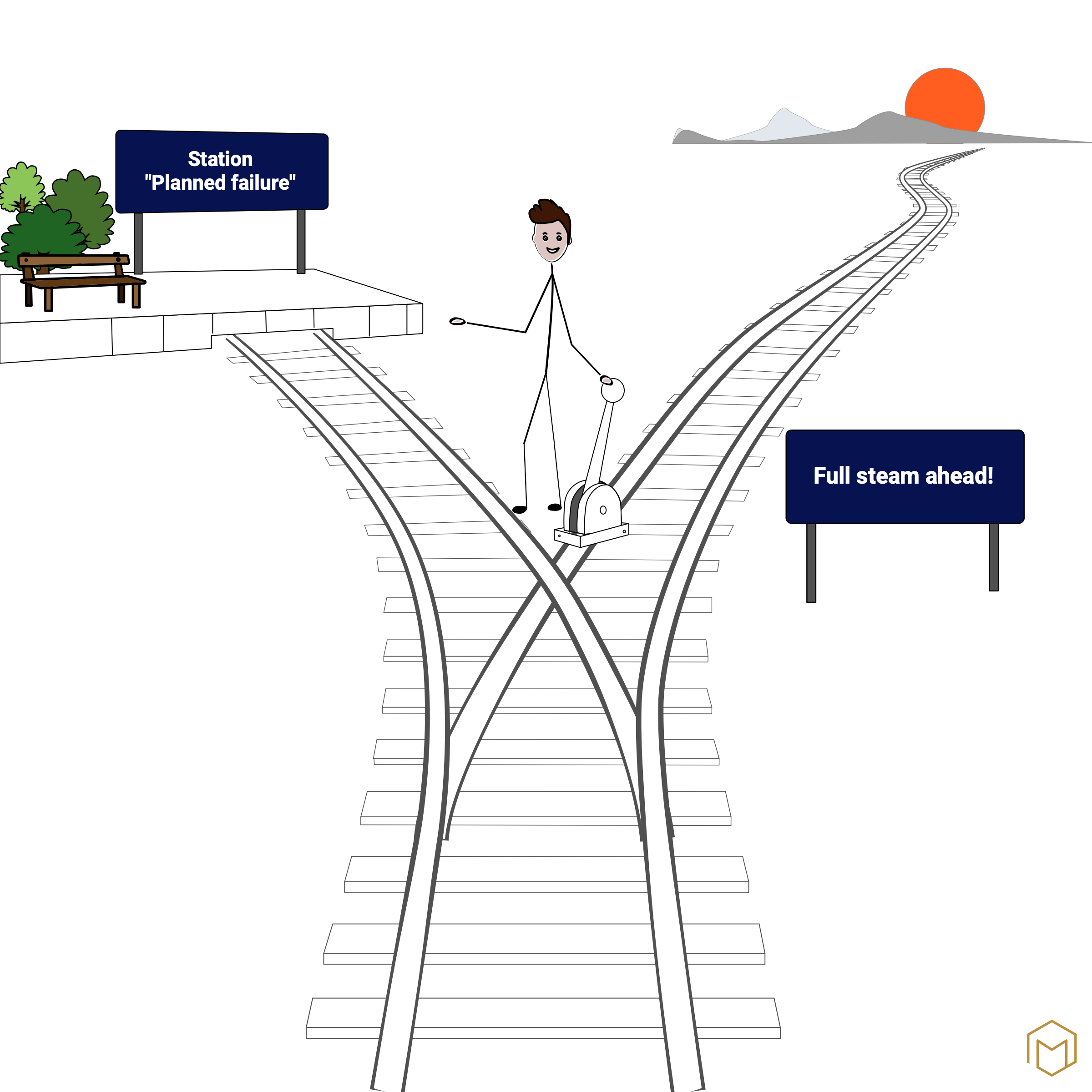
A project has been running for three years. The original timetable was twelve months; the budget is twice as high as planned; and the result is not yet operational. At the steering committee meeting, someone says: “We can’t stop now; we’ve already invested so much.” Everyone nods. The next extension is approved.
This statement is one of the most honest – and at the same time one of the most costly – in management. It describes a cognitive bias that behavioural economics has been researching for fifty years: the sunk-cost effect.
Read more... -
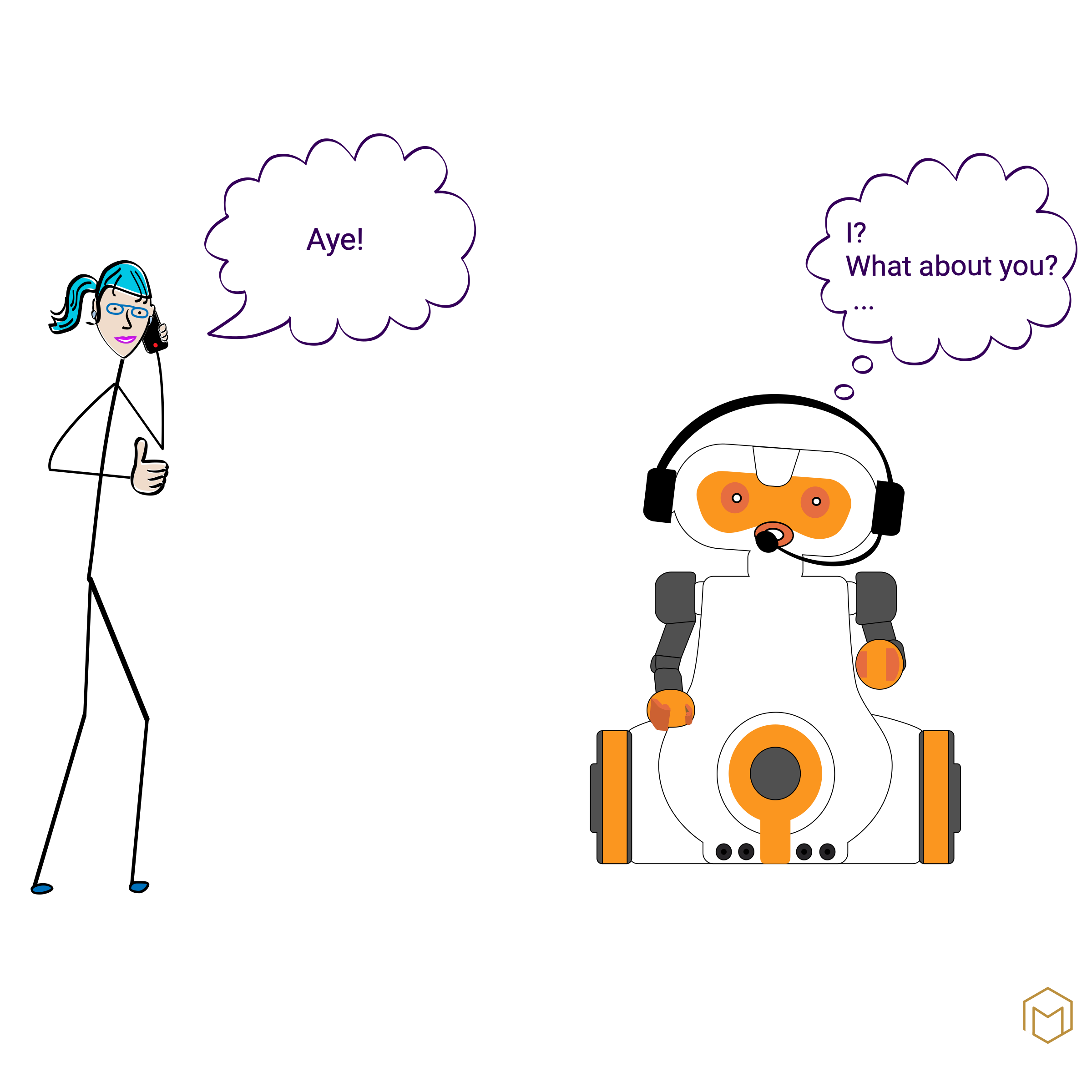
The bot that helps no one: Why chatbots and voicebots fail
You type your question into the small chat window on a website. Perhaps on your bank’s site, perhaps on a mail-order retailer’s site, perhaps on your insurance company’s site. You phrase the question clearly and politely, because you’ve got used to ChatGPT. Shortly afterwards, the reply arrives. It has nothing to do with your question. You try again, keeping it simpler and using different words. The next reply is a boilerplate text from the FAQs. You give up and dial the customer service number. This experience has been documented in studies. A 2024 UK survey by Cavell Group shows that around half of UK consumers now prefer human interaction as the quickest way to resolve customer service issues, while 35 per cent say that automated systems and chatbots fail to deliver satisfactory service. And 45 per cent have tolerated a product problem rather than deal with customer service.
Since ChatGPT, customers have come to expect a contact person who understands their question, keeps the context in mind and, when in doubt, asks for clarification rather than making assumptions. What they get is a FAQ machine in new packaging. Disappointment is inevitable.
Read more... -
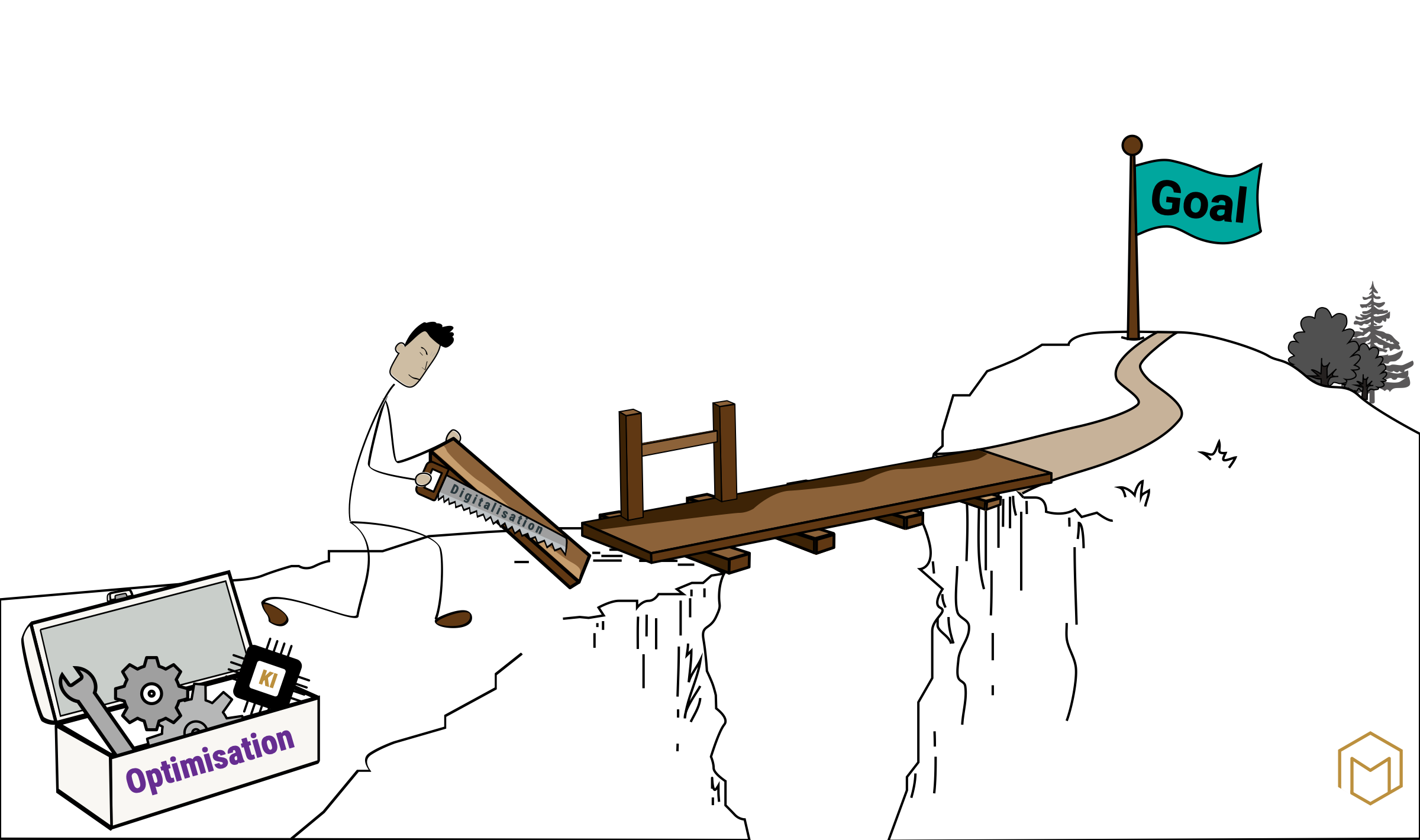
The Myth of Digitalisation: When the Tool Becomes the Goal
Five years ago, every strategy document stated: ‘Our goal is digitalisation.’ I asked my son, who was nine at the time, what he thought that meant. His answer was spot on: all sorts of things. Playing board games on the computer instead of at the table, writing on the computer – basically, everything you do on a computer instead of in real life.
Five years have gone by, and he’s become a teenager. What else has changed?
Read more... -
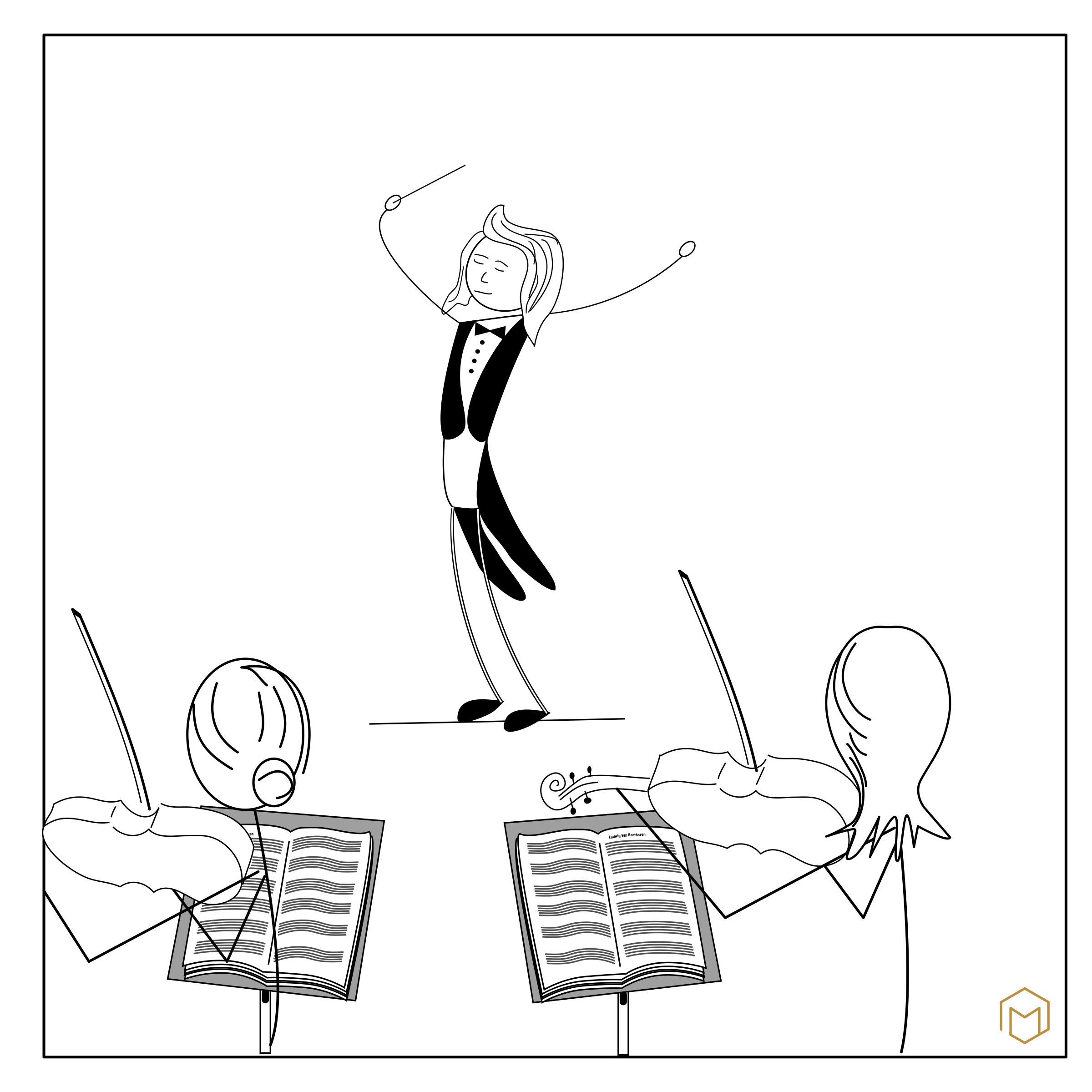
The myth of the ‘man-month’: more people, later completed
I recently came across a problem that’s often used as a textbook question. An orchestra of 120 musicians takes 40 minutes to perform Beethoven’s Ninth. How long do 60 musicians take to perform the same symphony? Below it, helpfully, it says: Let P be the number of musicians and T the time.
Read more... -
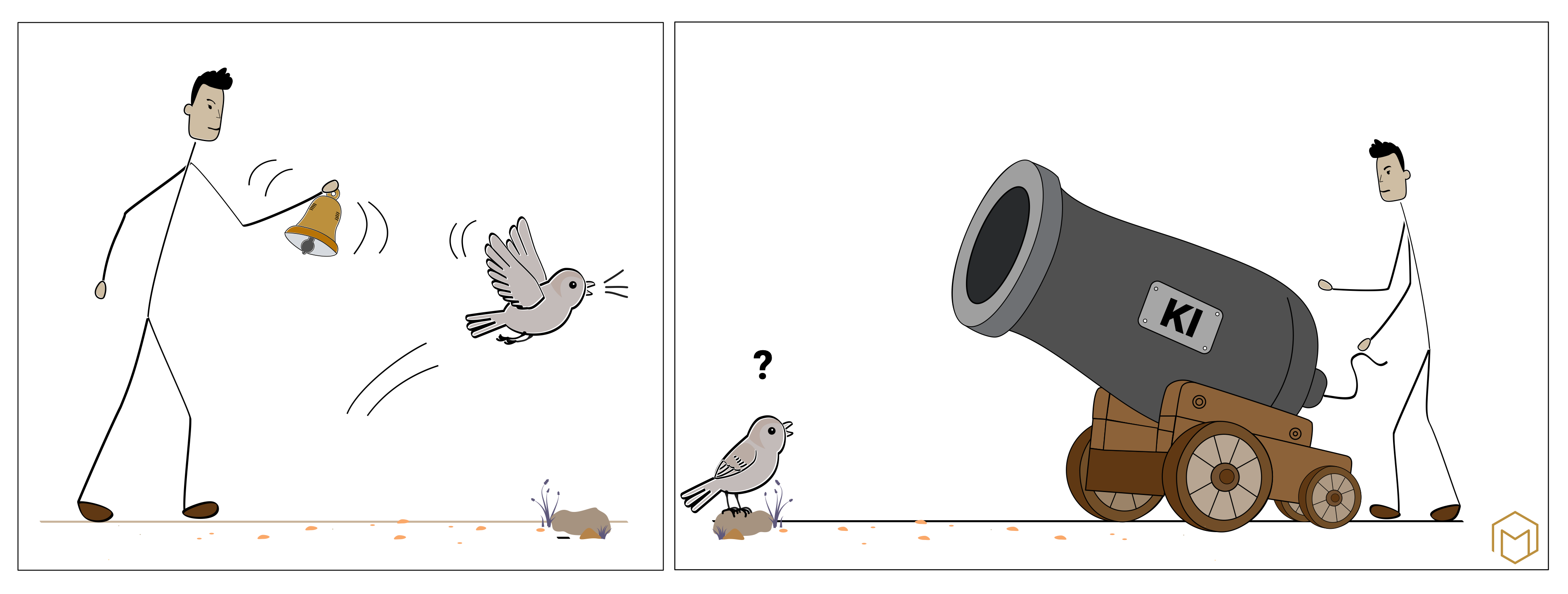
Sustainable AI: The right tool saves resources
It is now well established that AI does not run for free. Dr Dina Barbian shows that AI requires energy and water throughout its entire life cycle: from the manufacture of chips and servers, through the training of models, to every single small task.
Read more... -
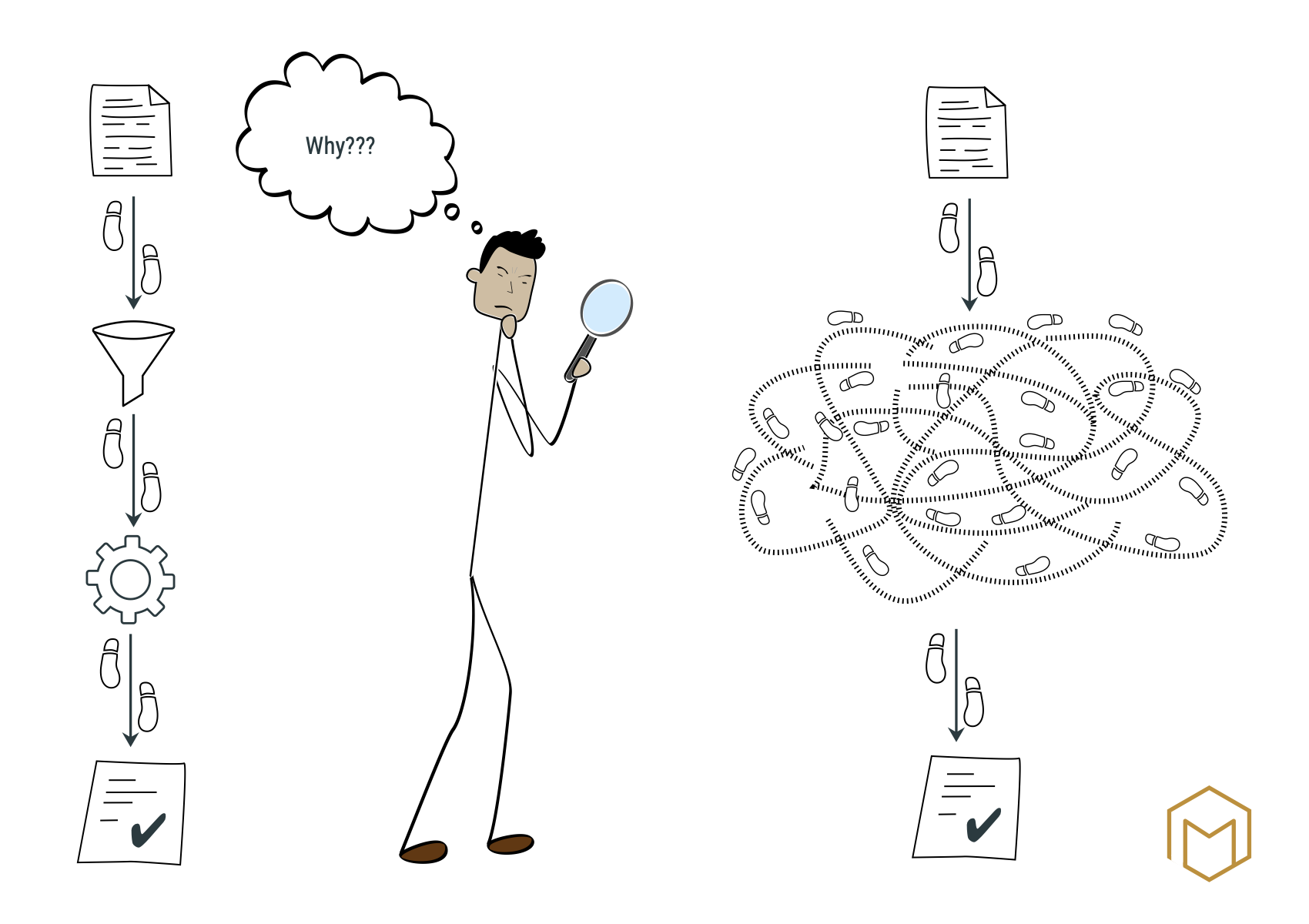
AI Without the Hype: explainability. What decision-makers need to know when using AI
A customer learns that their tariff is being switched to PrePaid. An AI is behind the decision. They ask: Why?
This question has two aspects. The business aspect: Do I myself understand what the system has done? The legal aspect: Do I need to be able to explain the process if the customer objects or a court asks?
The second question is not the subject of this article. It is a matter for the legal department. What matters here is this: if the answer is ‘yes, I must’, this has consequences for the AI involved in the process. This is precisely where the choice of technology becomes crucial.
Read more... -

First the process, then the tool
Almost every executive presentation I’ve seen recently contains the same sentence: ‘We need to do something with AI.’ What’s rarely mentioned alongside it is the problem it’s supposed to solve. The order is backwards. First comes the desire for AI, then the search for a task that fits it. Many even openly admit what triggered this: at the last conference, everyone was saying they were already using AI.
Read more... -
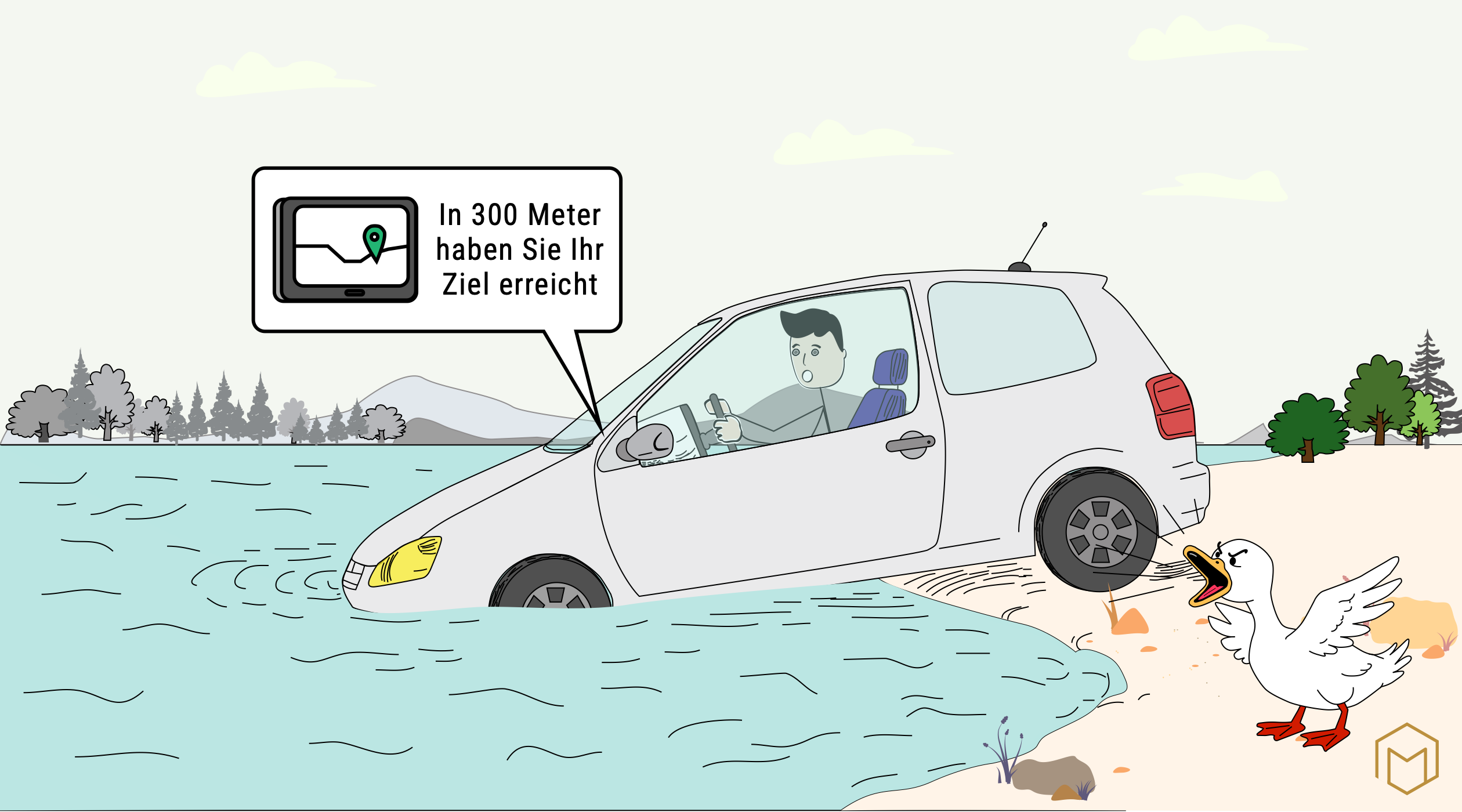
AI Without the Hype: Death by GPS and automation bias – why we blindly trust AI
Imagine you’re driving through an unfamiliar area. The sat-nav tells you to turn left, the road looks strange, and a sign warns of a flooded ford. You turn left anyway. Sounds absurd? It happens all the time. In English, a specific term has even become established for this: ‘Death by GPS’. A systematic study identified 158 documented cases between 2010 and 2016 alone in which people blindly followed their sat-nav into danger. Fifty-two of these ended fatally.
Read more... -
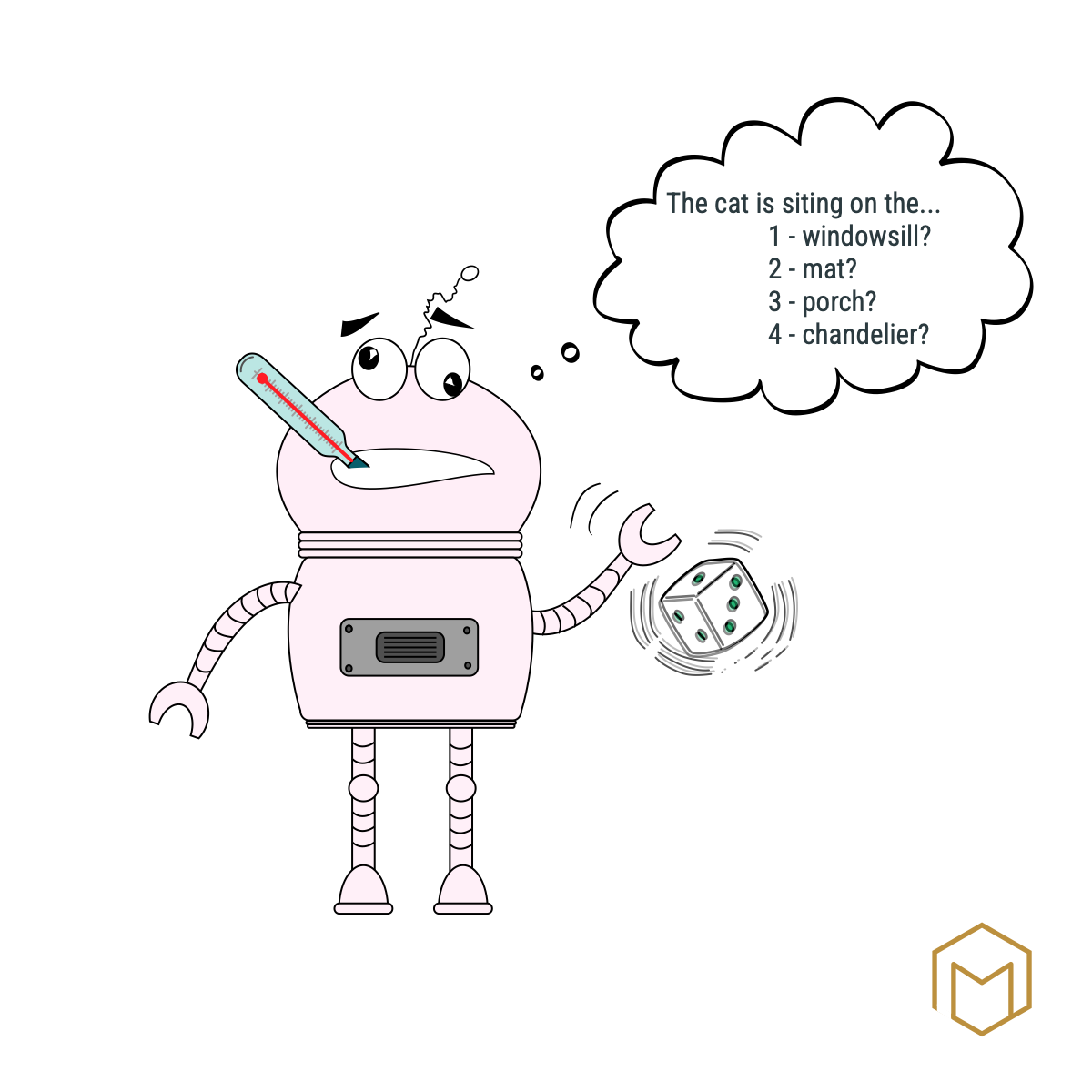
AI Without the Hype: A dice or a clockwork mechanism: why AI never says the same thing twice
A language model works with words. For each individual word, it calculates which following word is statistically the most likely. Imagine the beginning of a sentence: “The cat was sitting on the…” The model calculates that “the windowsill” is the most common next word in 60% of cases, “the mat” in 20%, “the stairs” in 5%, and “the veranda” in 1%. “The dishwasher”, on the other hand, almost never occurs.
The model makes its selection from this probability distribution. If it always chose the most probable word, the same answer would come out every time, provided the training data has not changed. It does not. The model “rolls the dice” and sometimes opts for “the mat”, sometimes for “the chandelier”.
Read more... -
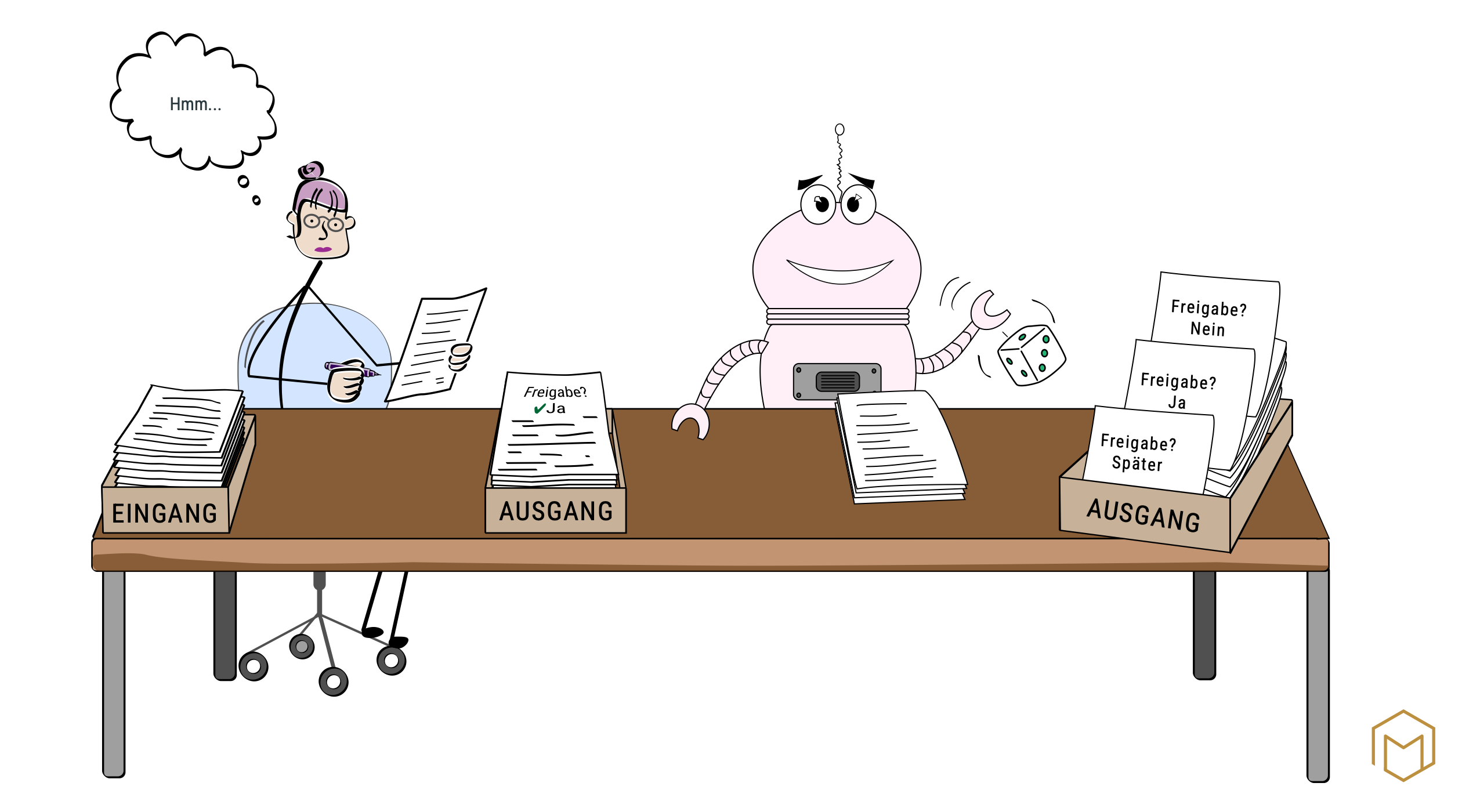
AI Without the Hype: People make mistakes too; that is why this sentence is misleading
A few days ago, I carried out a little experiment. I asked a language model how many Rs there are in the word ‘strawberries’. It’s a question nobody would ask in everyday life; you can see the right answer at a glance. The machine replied very quickly and confidently: ‘Two’. I asked again. Two again. It wasn’t until the third attempt that it gave the correct number, with complete conviction.
Read more... -

AI Without the Hype: Why AI seems like magic, and how understanding it demystifies it
The science fiction writer Arthur C. Clarke once said: "Any sufficiently advanced technology is indistinguishable from magic." Typically, Clarke’s law is used to describe an encounter with unimaginable technology. To someone from the Middle Ages, my robot vacuum cleaner would seem eerie. We, on the other hand, know exactly what it can and cannot do.
Read more... -

AI Without the Hype: The ELIZA effect and why we anthropomorphise AI
During my university studies, I programmed a simple dialogue agent. The principle was straightforward: recognise the input, match it against a pattern, and return the appropriate response. No intelligence. No empathy. No understanding. A programme that merely pretends.
Read more... -

Spotting unnecessary processes: Why municipal utilities guard garden benches
I heard a joke the other day. A new major takes command of a unit and finds two soldiers standing guard next to a garden bench. No one knows why. He asks his predecessor – who says it was already like that when he arrived. Eventually, the major tracks down the two men’s retired predecessor. He simply asks: “What? Has the paint still not dried?”
Read more... -
Process optimisation in municipal utilities: Why processes are the key to success
A customer rings up. He has got married and would like to change his name. A simple request.
Read more... -

Paperless processes at the municipal utility: How to reduce the flood of paper
What causes the flood of paperwork in the energy sector? How can I effectively keep it under control?
Read more.... -

AI without the hype: using AI to prevent customer churn, how municipal utilities retain customers
What is predictive analytics, and how can AI algorithms be used to predict customer churn? I’m talking to Peter Neckel, Head of Customer Analytics at Positiv Thinking Company, about the key factors for effective customer retention.
Mehr lesen... -

AI Without the Hype: AI in municipal utilities. What works today and what doesn’t
Hardly any other topic is currently dominating industry discussions quite as much as artificial intelligence. At every conference, in every strategy paper, in every conversation with software providers: AI is the answer. Exactly which question it answers, however, often remains unclear.
Read more... -

Measuring productivity: What are we actually measuring, and what should we be measuring?
A friend from Japan recently surprised me with a remark: he said that productivity in Germany is so much higher than in Japan. He said it in a positive light, almost admiringly.
Read more... -
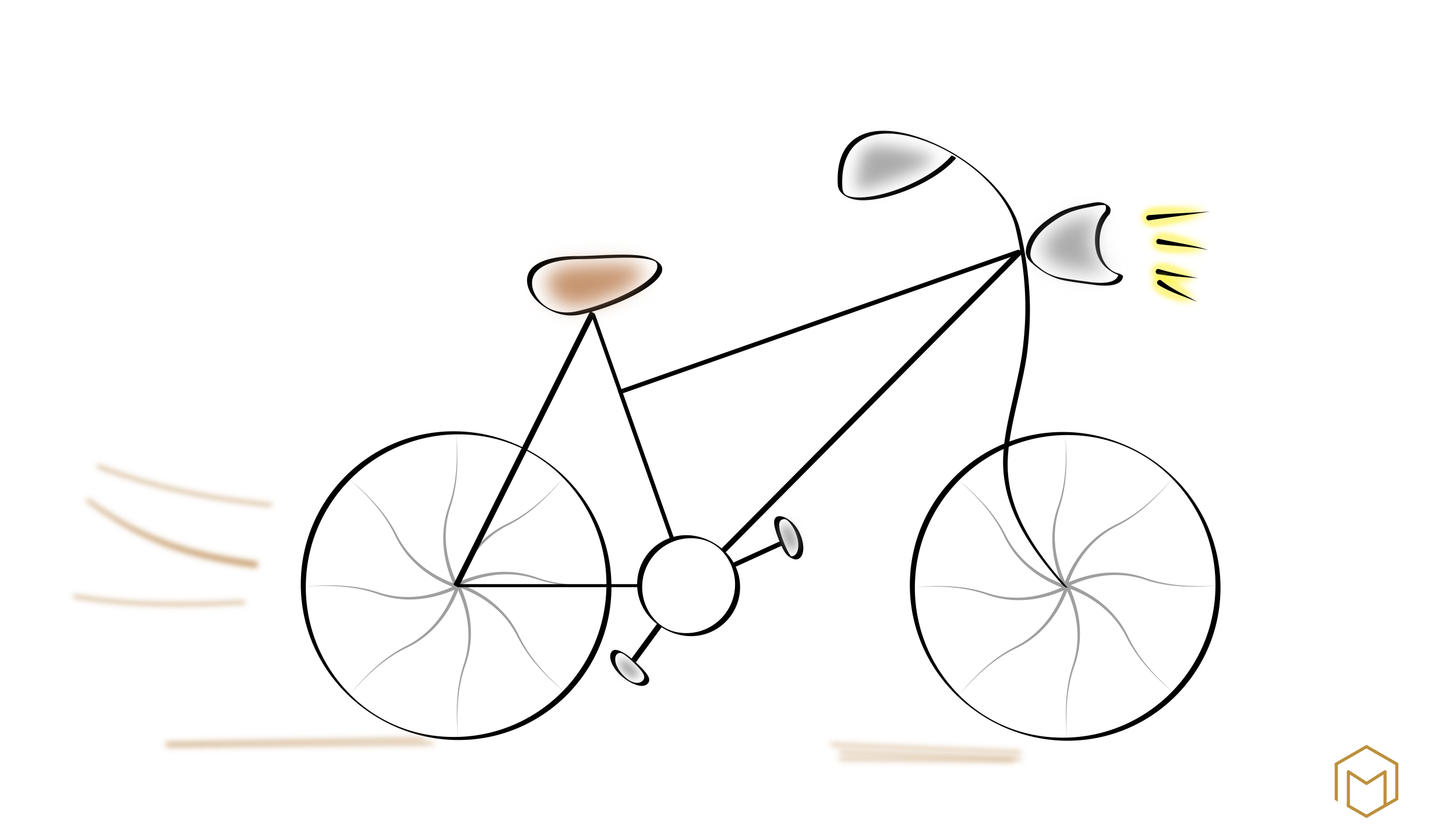
AI Without the Hype: How does AI learn? Explained simply for decision-makers
No child learns to ride a bike by being taught the physics behind it. They get on, fall off, and try again. After a few hours, and a few scrapes, they get the hang of it. The child knows intuitively how to keep their balance, without ever having seen a single formula. AI learns in a similar way. Not through rules that someone programmes into it, but through examples. Lots of examples. And through mistakes.
Read more... -
Process design: What a Japanese rice cooker can teach us about good processes
It was during a cookery class in Osaka that I first heard a Japanese rice cooker chime. Not a beep. Not an alarm. A little tune – almost like an invitation to eat. I thought: That’s rather nice. And then: Why doesn’t a German appliance do that?
Read more.... -

Digitalisation project at the municipal utility: How it’s set to become a success story
To optimise in a targeted way, I need a whole range of precision tools. But how do I choose the right tool? Which areas are the most urgent? What should I leave out?
Read more... -

Making better decisions: when gut instinct is enough and when data helps
Does that sound like a contradiction to you? Not to me. If you read on, you’ll find out why. Following your gut instinct is a good thing, isn’t it? Or is it? It depends. In both my personal and professional life, I like to use a simple rule of thumb: the more costly the decision or its consequences, the more rational it needs to be.
Read more... -
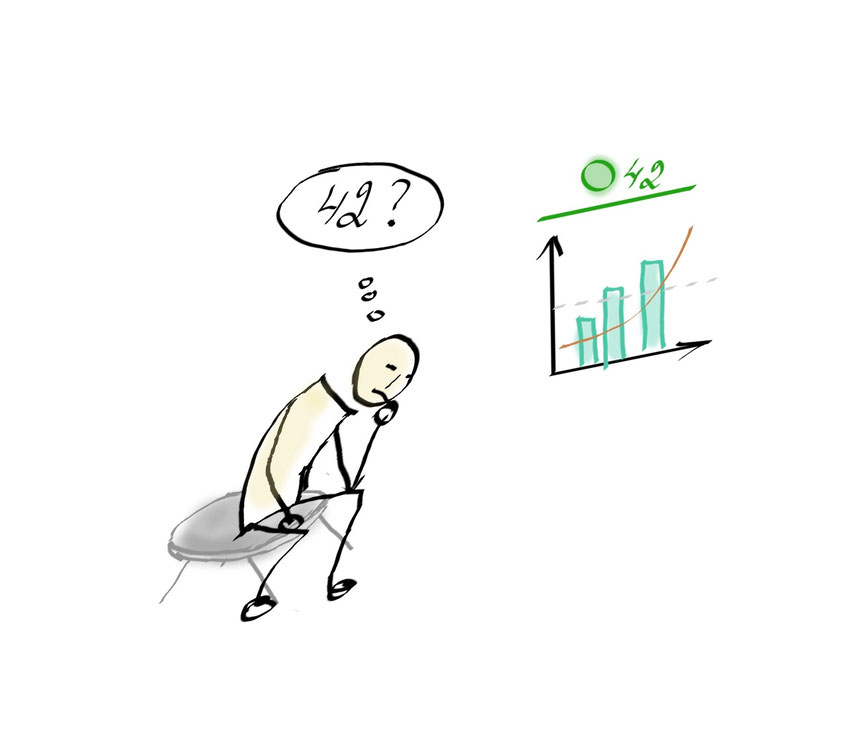
Using KPIs effectively: Why dashboards can be misleading
KPIs and dashboards have such a reassuring effect. They give the impression that you have the business under control: every single tiny movement is recorded. The traffic light is green, so everything is fine. With their decimal places, the figures look so precise. But appearances can be deceiving.
Read more... -

AI Without the Hype: Why AI predictions are unreliable and that’s okay
Last summer, I invited some friends over for coffee on the terrace. The app said it would be sunny. We ended up having coffee indoors.
Read more... -

Make or Buy: When is in-house development worthwhile for a municipal utility?
A water leak. Right in the middle of the house. Just when you least need it.
Read more... -

Best-of-breed vs. off-the-shelf software: The right IT strategy for municipal utilities
Do you expect Lewis Hamilton to win a Formula 1 race whilst driving a camper van?
Read more... -
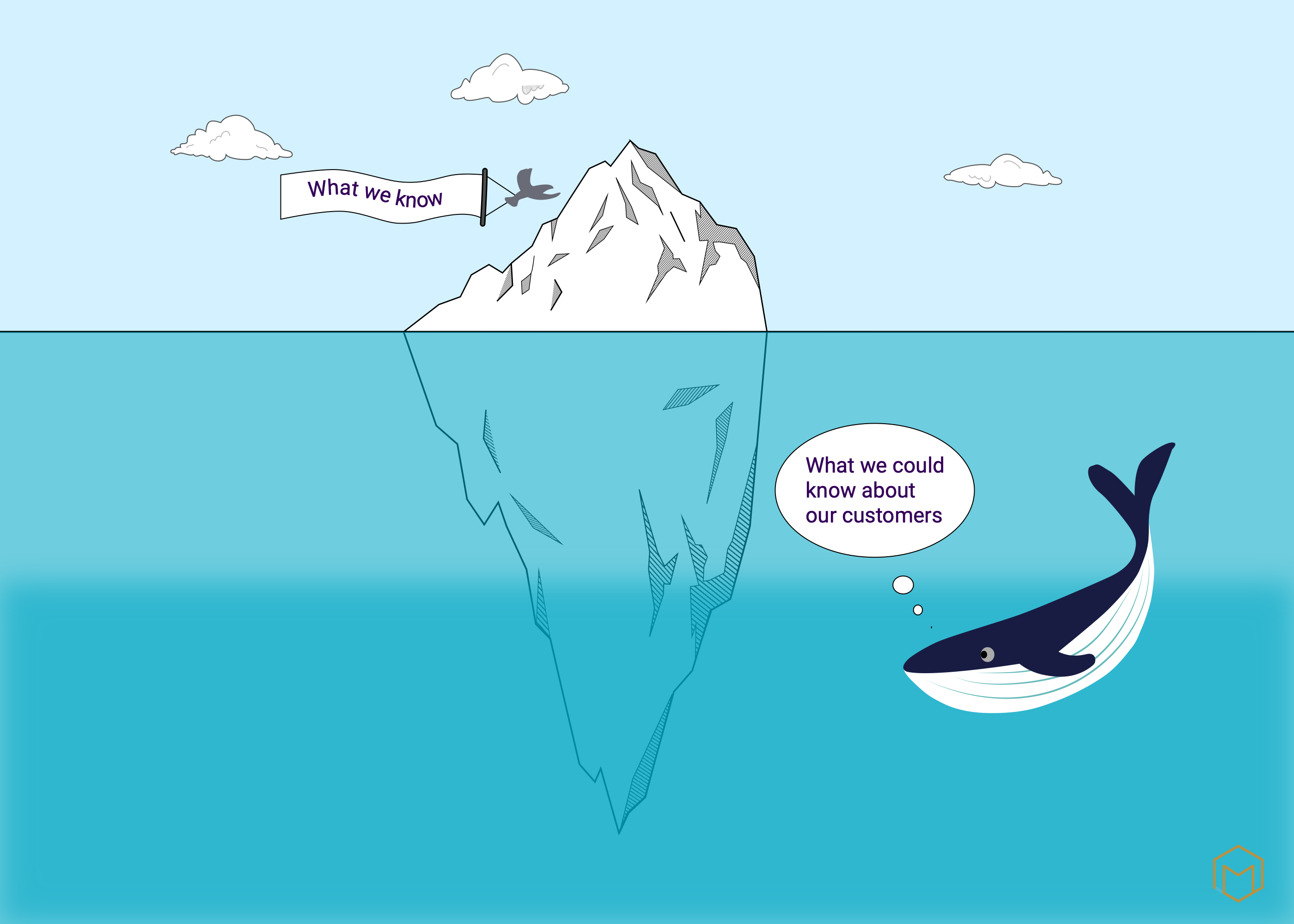
Using customer data at the municipal utility: How well do you really know your customers?
Municipal utilities know very little about their customers, and this is down to the nature of the product. How existing data can be used in a targeted way to change this.
Read more...