

Do you expect Lewis Hamilton to win a Formula 1 race even whilst driving a camper van?
Cars are built by their manufacturers for specific purposes: to race, to carry heavy loads, or to serve as a family car.
There is a car ideally suited to almost every type of road. The cars are also tailored to a specific target audience: sporty drivers, tradespeople, families – because they all have different requirements for the vehicle. If you try to ride a bike on the motorway, it’ll most likely end in disaster.
Sticking with the example of Lewis Hamilton, he won’t win a Formula 1 race in a camper van, but he can travel from Copacabana to Alaska in complete comfort. In turn, you’d hardly take a racing car for such a journey.
What does all this have to do with IT? When software vendors develop something, they have a specific use case – route type – and target audience in mind; they know which of their customers’ problems they can solve better than the competition.
What does this mean for you as a manager in a company? I’m assuming here that your overarching goal is to reduce process costs and increase customer and employee satisfaction.
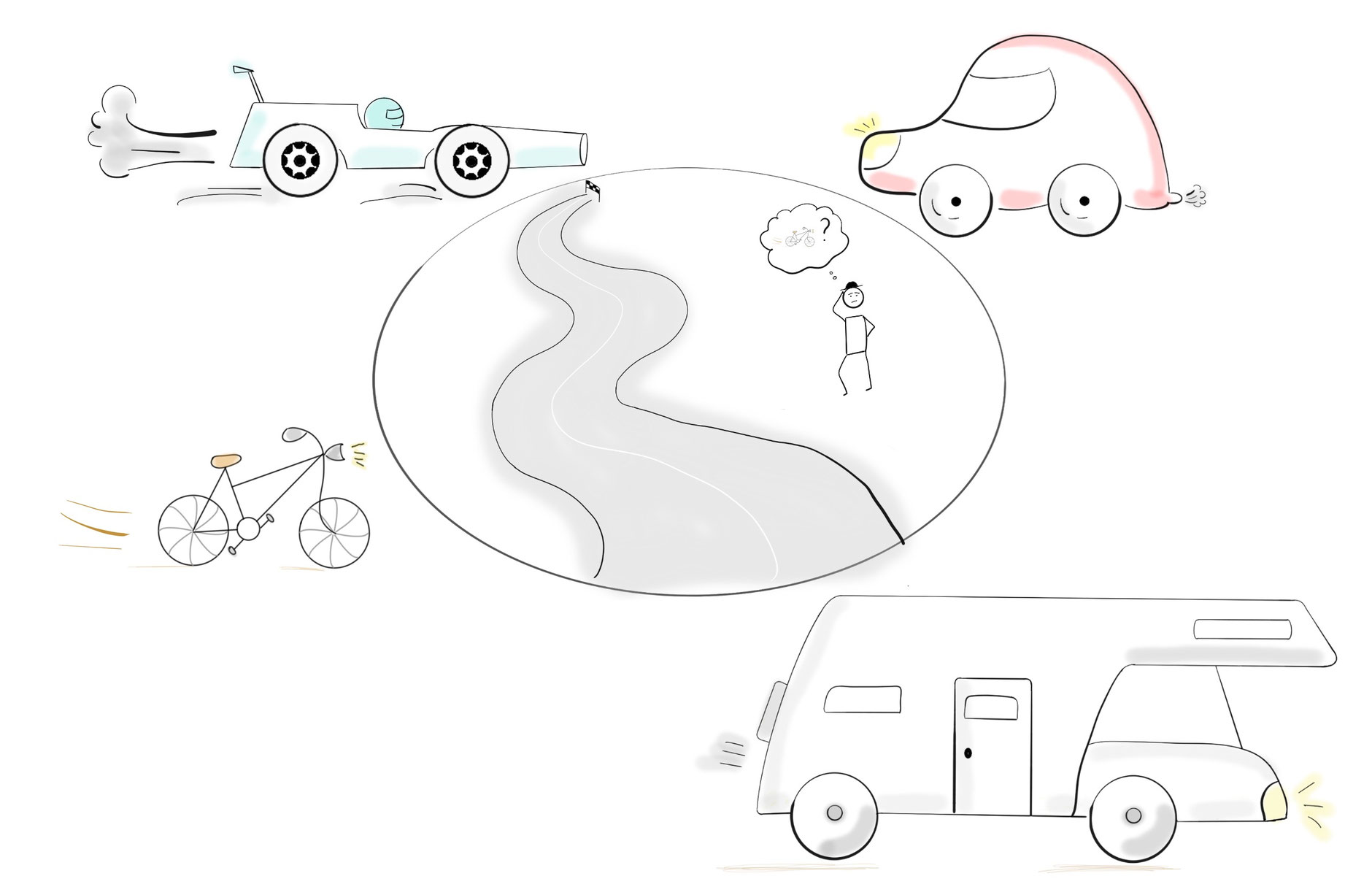
Many roads lead to Rome. But whichever one you choose, you cannot avoid having to select the right software. The same principles apply here as when choosing the right car: an application that is perfectly tailored to one area of responsibility may perform miserably in another. I cannot expect my staff to deliver world-class service in record time if they are inadequately equipped with the right technology.
So I need a whole fleet of connected vehicles that effortlessly come out on top in their respective areas of operation.
Does the ‘best-of-breed’ approach increase complexity? Not really. It simply shifts the focus.
Instead of using a sledgehammer and chisel to adapt cars to unsuitable terrain, or training staff to park lorries in the city centre, we invest in connecting the vehicles.
Is it easy? Certainly not. But it’s worth it.